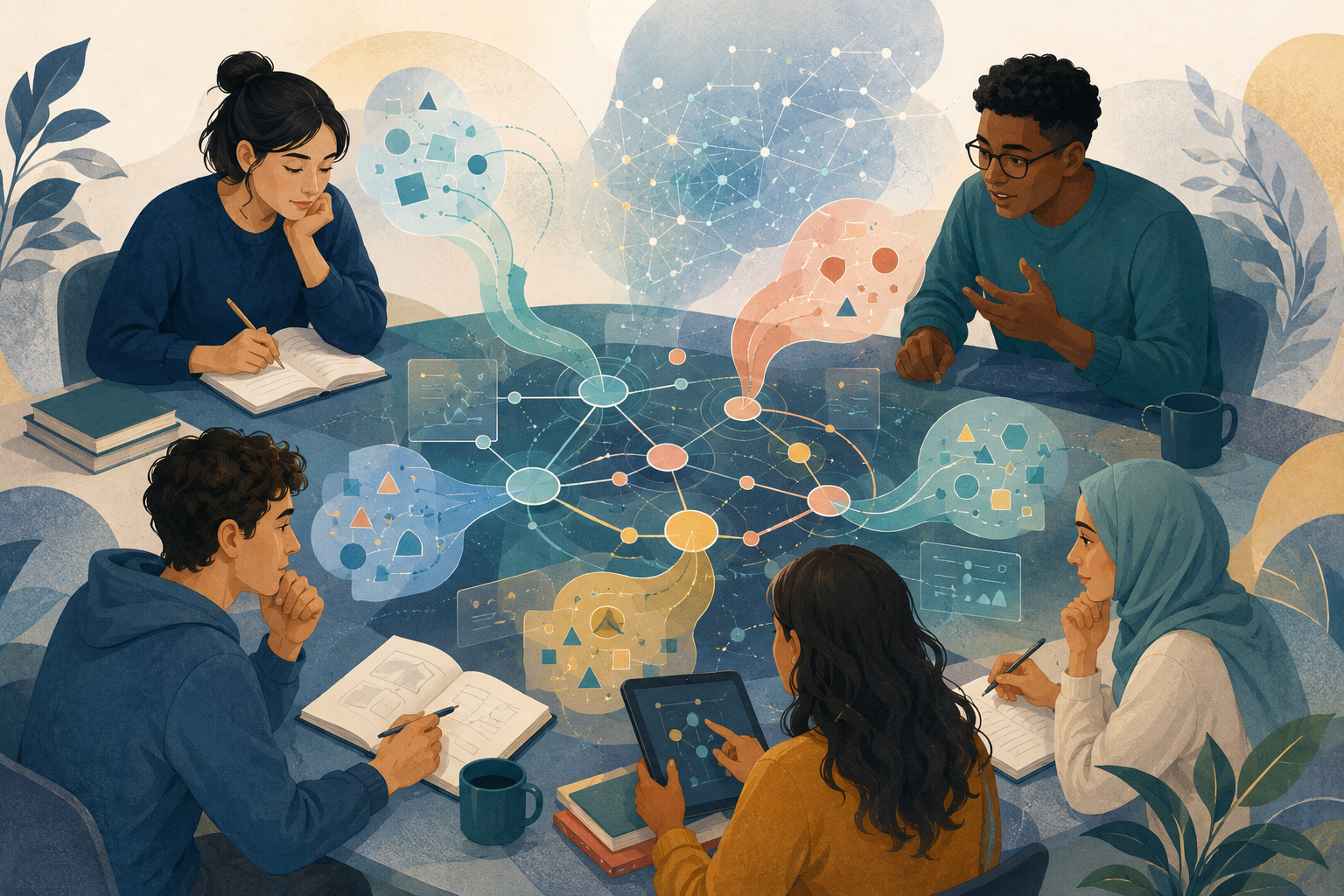
Learning, Reflection & Collaborative Sensemaking
Examines how learners reflect on experience, interpret feedback, and build shared understanding through interactions with peers and intelligent systems — across AI-assisted reflection, open-ended problem solving, and spatial learning.
Representative Papers
ReflectEd: Evaluating Reflection-Driven Learning in an AI-Assisted System
When There Is No Right Answer: How Computing Students Navigate Open-Ended Problems through Collaborative Discussion and Peer Evaluation
Other Relevant Papers
- Getting There and Beyond: Incidental Learning of Spatial Knowledge with Turn-by-Turn Directions and Location Updates in Navigation Interfaces
- A Scalable Online Platform for Evaluating and Training Visuospatial Skills of Engineering Students
Students Involved



Human–AI Collaboration in Mentorship & Careers
Human-centered AI systems designed and studied to support—rather than replace—human relationships in research mentorship and career development, helping individuals prepare for consequential conversations, interpret feedback, develop professional skills, and retain agency in AI-mediated settings.

Representative Papers
Expecting Too Much, Getting Too Little: Exploring the Challenges and Design Opportunities of Asynchronous AI Interviewers
Beyond Representation: Mechanisms of Culturally Affirming Mentorship for Black and Latinx Students in STEM
Competing or Collaborating? The Role of Hackathon Formats in Shaping Team Dynamics and Project Choices
Other Relevant Papers
- VidLyz: An Interactive Approach to Assist Novice Entrepreneurs in Making Persuasive Campaign Videos
- Recommendation for Video Advertisements Based on Personality Traits and Companion Content
Students Involved


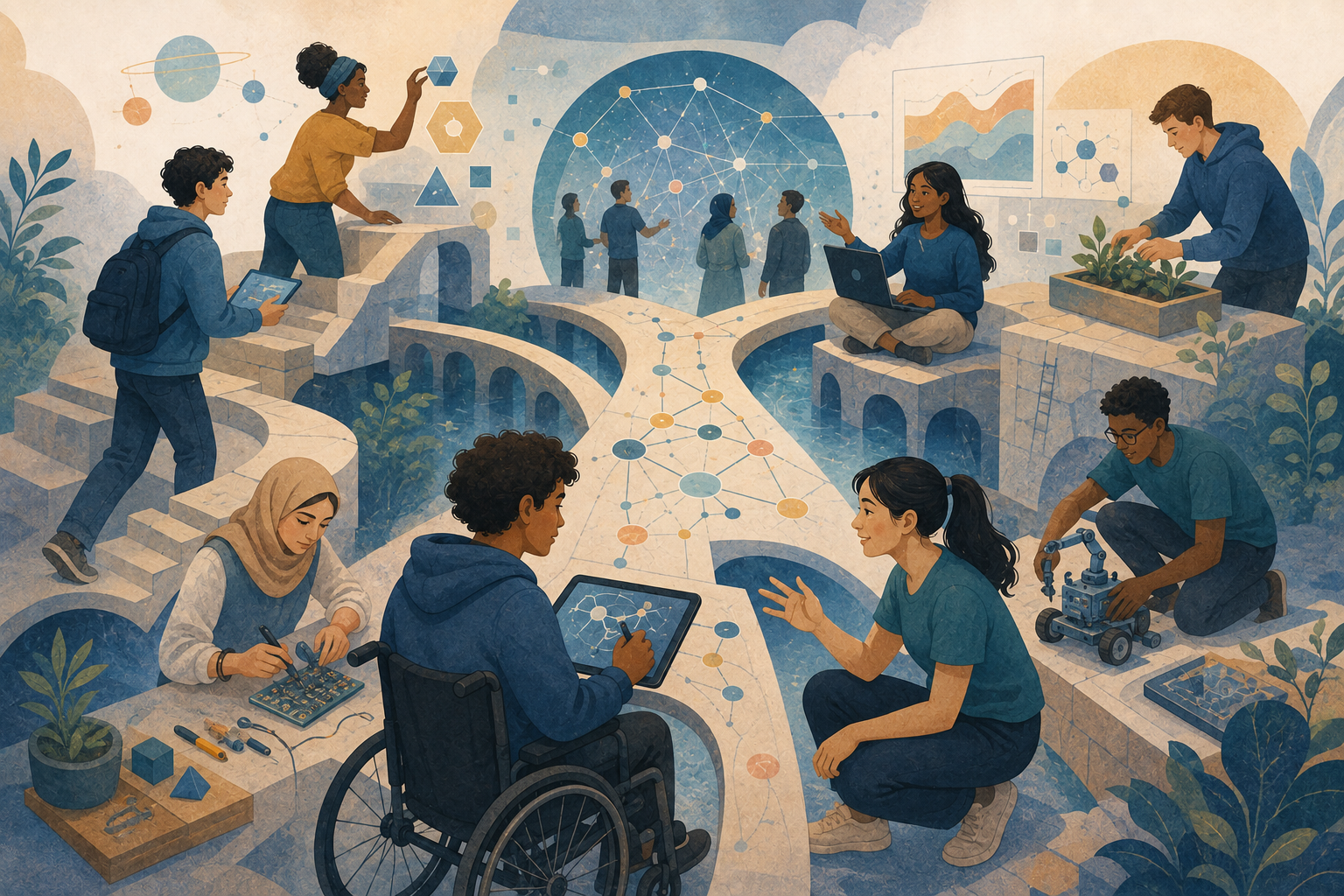
Inclusive Computing & STEM Participation
Examines the barriers, relationships, and learning environments that shape participation and belonging in computing and STEM, with community-centered interventions supporting historically underrepresented students through culturally affirming role models, inclusive learning experiences, and accessible pathways into computing.
Representative Papers
Beyond Representation: Mechanisms of Culturally Affirming Mentorship for Black and Latinx Students in STEM
"You Don't See Too Many of Me, Too Many of Us, in That Area": Exploring the Challenges and Opportunities of Promoting STEM Education Among Black and Latinx Students
Students Involved
Students Involved
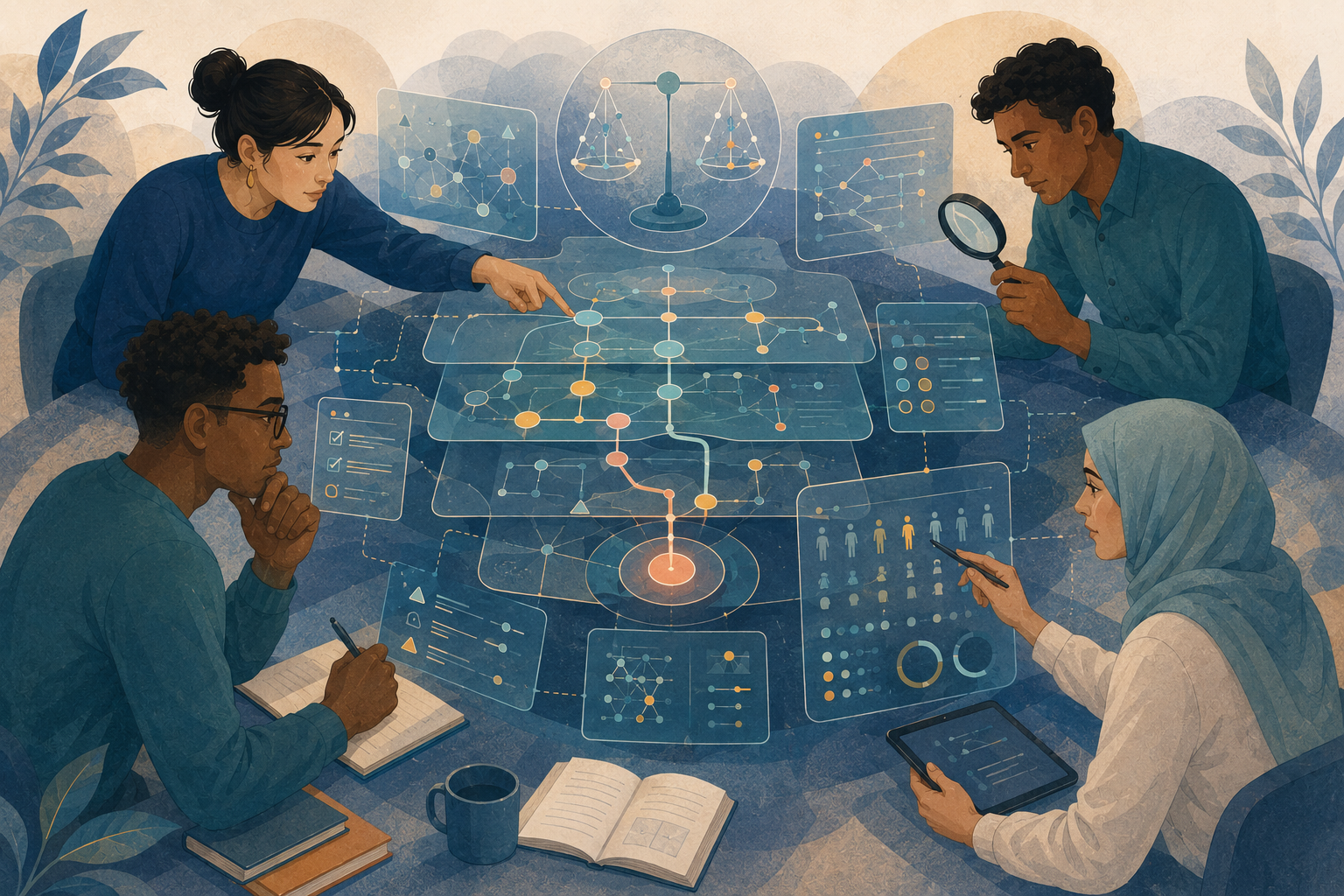
Responsible, Explainable & Trustworthy AI
Examines how AI systems and their outputs can be made more understandable, reliable, and accountable — through human-centered explanations, context-sensitive evaluation methods, and robustness analyses that identify model limitations, support informed interpretation, and strengthen appropriate trust in AI-assisted decisions.
Representative Papers
Enhancing Image Comprehension: The Impact of AI-Generated Explanations on Perception of Altered and Synthetic Media
COBIAS: Assessing the Contextual Reliability of Bias Benchmarks for Language Models
Analyzing the Sensitivity of Vision-Language Models in Visual Question Answering
Other Relevant Papers
- Interpretable Explanations for Probabilistic Inference in Markov Logic
- Fine-Grained Explanations Using Markov Logic

Social Computing, Persuasion & Technology Adoption
Examines how social platforms, community norms, and persuasive technologies shape participation, decision-making, and the adoption of new tools — designing and studying social computing systems that support communities, improve access to trustworthy information, and reveal how social signals, narratives, and multimedia influence attitudes and behavior.
Representative Papers
Why Should I Bother to Break the Norm?: Exploring the Prospects of Adopting Technology-Driven Solutions by Indian Shrimp Farmers
Fishing for Validation: Understanding Promises and Challenges of a Private Social Media Group for COVID-19 Long-Hauler Patients
Effects of Socially Stigmatized Crowdfunding Campaigns in Shaping Opinions
Other Relevant Papers
Students Involved
Saquib Ahmed (PhD)
Md Nazmus Sakib (PhD)
Lokesh Medarametla (MS)